

Why Emotional Arc Tracking Is Essential for Writing Engaging Stories
If you have ever finished writing a chapter and felt something was not quite right but could not explain why, you are not alone.
Many manuscripts struggle not because of grammar or spelling, but because the emotional journey of the story does not flow properly. Readers may feel bored, overwhelmed, or disconnected without fully understanding the reason.
This is where emotional arc tracking becomes incredibly powerful.
By understanding how emotional intensity rises and falls throughout your story, you can create a reading experience that keeps readers hooked from the first page to the last.
This is exactly what the Pepperfish Emotional Arc Visualizer was designed to help authors do.
What Is an Emotional Arc in Storytelling?
The emotional arc of a story describes how emotional intensity rises and falls throughout a narrative.
Every engaging story moves through emotional changes such as:
- tension
- anticipation
- conflict
- relief
- triumph or loss
When these emotional shifts are balanced well, readers remain invested in the story.
When they are not, common problems appear. Chapters may feel slow, emotional moments can feel rushed, or the story may struggle to maintain momentum.
These issues often occur even when the writing itself is technically good.
This is why many experienced authors pay close attention to emotional pacing when revising their manuscripts.
Why Emotional Arc Tracking Matters
Readers do not just follow the plot of a story. They follow how the story makes them feel.
A strong emotional arc helps to:
- keep readers engaged
- build anticipation and suspense
- create memorable story moments
- encourage readers to finish the book
- increase the likelihood of positive reviews
Many negative book reviews actually relate to emotional pacing problems.
Readers might say things such as:
- “The story felt slow.”
- “I could not get into it.”
- “The middle dragged.”
Comments like these are often connected to issues with the emotional structure of the story, not necessarily the writing quality.
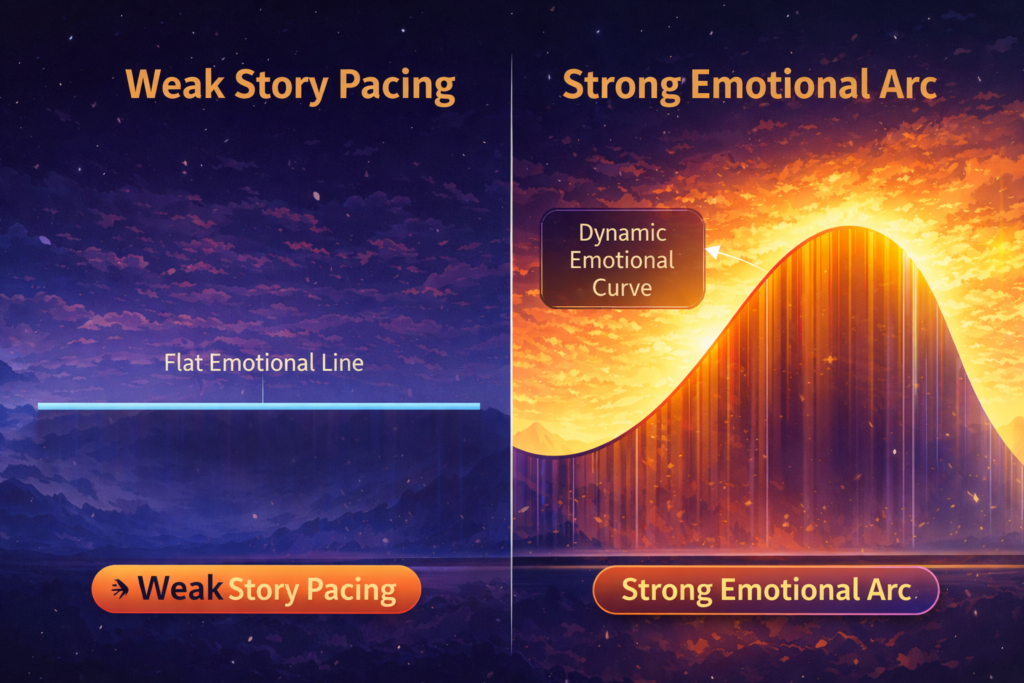
Visualizing the Emotional Flow of Your Story
One of the biggest challenges for authors is that emotional pacing can be difficult to recognize while writing.
You may feel that something is off, but identifying the exact problem can be challenging.
This is why visual tools can be extremely useful.
The Pepperfish Emotional Arc Visualizer maps the emotional intensity of your chapter or scene so you can see how tension rises and falls across your writing.
You can try the tool here
With a visual overview of emotional pacing, it becomes much easier to identify:
- flat sections in the story
- repeated emotional beats
- sudden emotional spikes
- pacing problems in the middle of chapters
Instead of relying on instinct alone, you can see how your story flows.
The Problem With Flat Emotional Sections
One of the most common issues in manuscripts is the presence of flat emotional sections.
These are parts of the story where:
- emotional intensity does not change
- tension remains constant
- the reader’s emotional engagement drops
Flat sections often occur during long descriptive passages, extended dialogue, unnecessary exposition, or slow transitions between scenes.
When authors visualize their emotional arc, these sections become much easier to identify.
Once you can see where the pacing slows down, you can strengthen those moments by:
- introducing conflict
- raising the stakes
- increasing tension
- adding emotional impact
Small adjustments can dramatically improve how a chapter feels to readers.
Emotional Arcs and Reader Engagement
Stories that maintain strong emotional momentum tend to produce better reader engagement.
Readers are more likely to stay invested in books that guide them through a compelling emotional journey.
Strong emotional pacing often leads to:
- higher reader satisfaction
- stronger word of mouth
- more positive reviews
- better completion rates
This is why emotional pacing is so important for authors who want their books to succeed.
Tools like the Pepperfish Emotional Arc Visualizer make it easier to ensure your story maintains this emotional momentum.
You can explore the tool here
Strengthening Your Manuscript Before Publishing
Emotional pacing is only one part of building a strong manuscript.
Before publishing, authors should also evaluate:
- story structure
- pacing
- clarity
- reader engagement
- overall market readiness
This is where the Pepperfish Manuscript Critique Tool becomes incredibly helpful.
The tool provides structured feedback on your writing and highlights areas that may need improvement before readers or reviewers encounter them.
You can try the manuscript critique tool here.
Other Tools That Help Authors Improve Their Books
In addition to the Emotional Arc Visualizer and Manuscript Critique Tool, Pepperfish provides several other tools designed to help authors strengthen their work and reach more readers.
These include:
Reader Experience Analyzer
Understand how your writing feels from the reader’s perspective.
Amazon Look Inside Optimization Tool
Improve the opening pages that readers see before deciding to buy your book.
KDP Keyword Generator
Discover search keywords that help readers find your book on Amazon.
KDP Category Generator
Identify hidden categories where your book has a better chance of ranking.
Together, these tools help authors move from a rough draft to a polished and publish ready manuscript.
Try the Emotional Arc Tool for Free
If you want to understand how the emotional flow of your story works, the best approach is to visualize it.
The Pepperfish Emotional Arc Visualizer analyzes your writing and shows how emotional intensity changes throughout your chapter or scene.
You can try it here.
The free plan allows you to explore the tools without entering payment details, and you can upgrade at any time if you want deeper analysis.
Final Thoughts
Writing a great book involves more than strong grammar or an interesting plot.
A successful story guides readers through an emotional journey that keeps them engaged until the final page.
By tracking the emotional arc of your story, you can identify pacing issues, strengthen your storytelling, and create a more compelling reading experience.
With tools like the Pepperfish Emotional Arc Visualizer and the Manuscript Critique Tool, improving your manuscript becomes far easier.
Frequently Asked Questions About Emotional Arcs in Writing
What is an emotional arc in storytelling?
An emotional arc describes how emotional intensity rises and falls throughout a story. It reflects how tension, conflict, and resolution shape the reader’s experience as the narrative unfolds.
Why is emotional pacing important in a story?
Emotional pacing keeps readers engaged by balancing tension and relief throughout the narrative. If emotional intensity remains flat for too long, readers may lose interest.
How can writers improve the emotional arc of their story?
Writers can improve emotional arcs by identifying flat sections, strengthening conflict, and adjusting pacing to create stronger emotional momentum throughout the story.
Tools such as the Pepperfish Emotional Arc Visualizer help authors see how emotional intensity changes across their writing.
Can emotional arcs affect book reviews?
Yes. Many negative reviews mention pacing problems or slow sections. These issues often relate to emotional pacing rather than grammar or writing style.
Improving emotional arcs can lead to stronger reader engagement and better reviews.