My Life as an Author and Why I Built Pepperfish Publishing
I’m Nick Tyler, the author of Haunted Yorkshire, British Ghosts and Where To Find Them, and many other titles. Being an author is rarely just about writing. It’s about patience, discipline, and understanding how creativity survives in the real world. Over the years, writing has shaped how I think, how I work, and ultimately why Pepperfish Publishing exists at all.
Most days begin the same way. I sit down, open a document, and write. Not because inspiration has struck, but because writing is a craft. You show up, you practice, and you improve through repetition. Waiting for the perfect moment is a luxury most working writers cannot afford.
That mindset has carried through everything I do. Writing taught me how to hold attention, how to structure ideas, and how to guide a reader so they feel confident they are in capable hands. Those same principles apply just as much to publishing, marketing, and building tools for other writers.
How I Write
People usually fall into two camps when it comes to writing. Plotters and pansters. Neither is right or wrong. They are simply different approaches to reaching the same goal.
I am firmly a panster.
For me, it starts with an idea that refuses to leave me alone. Sometimes it’s a name. Sometimes an image or a location. And then something electrifying happens. I get an overwhelming urge to write an opening scene.
That opening is almost always terrible.
So I write another. And another. Each attempt feels pointless at the time, but each one plants a seed that grows into the next. Eventually, the opening scene begins to breathe. It becomes something usable.
What follows depends entirely on the book.
Some stories unfold effortlessly, as if they already exist and I am simply uncovering them page by page. Others demand more thought. More reflection. I need to step back and ask what drives the characters, what pushes the scene forward, and why this story deserves to be told at all.
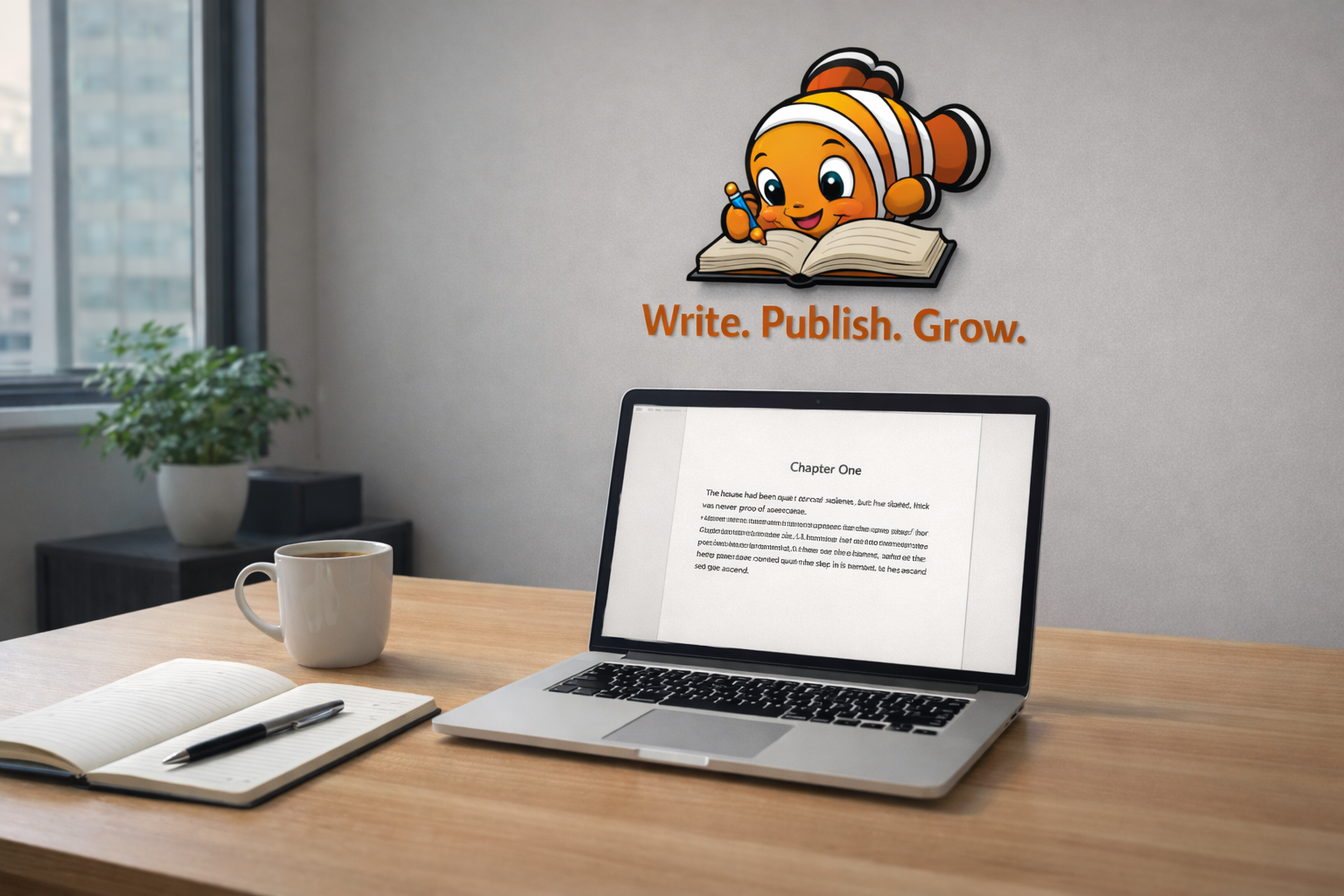
Fuelled by coffee in a quiet office, with the steady tapping of keys as the soundtrack, the story slowly takes shape.
The most important lesson I have learned over a long writing career is that a book is never written in the first draft. Or the second. Or the third. Writing is a marathon, not a sprint.
Rushing to finish and publish often sacrifices the very thing that makes a book special. Time matters. Stepping away matters. Sometimes weeks. Sometimes months. The work is always stronger for it.
What I Write and Why
My earliest influences were Stephen King, Tim Burton, and a deep fascination with the paranormal. Not as a ghost hunter, but as someone drawn to stories. To the dark romance that lives inside a great ghost tale.
I studied parapsychology, which actually pushed me more toward debunking than belief. But I learned an important lesson very quickly. If you want to write for a living, you must write for your audience.
Readers of paranormal books are often passionate believers. That expectation matters. My writing had to adapt. Not to mislead, but to respect the genre and the people investing their time and money in it. That is the business side of writing, and it is something many authors struggle to accept.
My bestselling books came as a genuine surprise.
A visit to Alton Towers theme park in the UK coincided with the reopening of a renovated haunted house attraction using projection mapping and immersive storytelling. With my love of horror, I was instantly drawn to The Curse at Alton Manor. The ride offered only a few lines of backstory, but it was enough.
I built a story around those fragments. Sales followed quickly, which pushed me to keep refining the manuscript again and again. As a panster, something unexpected happened. Other ride backstories began to overlap. Themes echoed. Characters aligned. Without meaning to, I had created an interconnected web of stories linking attractions across one of the UK’s most loved theme parks.
Although I was already traditionally published, this was the point where I truly found a niche. One that brought both creative satisfaction and long term financial stability.
The Business of Writing
Having friends who were already successful authors helped me understand early on just how difficult the writing industry can be.
The dream is simple. Write a great book, get it published, and live off the royalties. The reality is far more complex.
I often compare publishing to browsing films on Netflix. A handful of big budget titles dominate the front page. But beneath them are thousands of excellent films buried deep in the search results. Books work exactly the same way.
The huge advances you hear about are usually reserved for books already predicted to become bestsellers. Most authors receive no advance at all. Instead, they earn royalties, typically paid twice a year and calculated as a percentage of profit as, outlined in their contract. That doesn’t mean the book lacks quality. It simply means it is competing in a saturated marketplace.
Being traditionally published can also make writing feel more like work than a labour of love. A publisher wants a marketable product, which means you’re often given a target word count to stick to, along with scenes that need adding, editing, or cutting altogether. If your book includes images, you’ll usually be given a precise number, which means adding or removing them even when your instincts tell you otherwise.
For a first time author, the payoff is rarely monetary. It’s exposure. A deep trail of metadata attached to your name across the internet, embedded into bookshelves and catalogues, making it far easier to pitch, sell, and position future projects.
If I started again, I would not change much. Every book I wrote shaped my voice and sharpened my craft. The only difference would be taking the work more seriously sooner, and being less eager to tear everything apart in the early days. Slowing down made me a better writer.
Why I Built Pepperfish Publishing
Without fail, the two most common questions I’m asked are, “How do I get published?” and “Why isn’t my book selling on Amazon KDP?”
Getting published requires two things. A strong, original manuscript, and a large amount of luck. There is a reason J.K. Rowling’s Harry Potter faced repeated rejection. A book must reach the right desk at the right time in its strongest possible form.
With Amazon KDP, quality writing is only part of the equation. A book also needs correct metadata and visibility. I often explain metadata as the librarian of Amazon. Without it, even great books remain invisible.
Pepperfish Publishing began as a micro traditional publisher in the UK. But we quickly noticed a gap in the market. Too many authors were being sold expensive promises by freelance editors offering guaranteed bestseller results for thousands of dollars.
We chose a different path.
Working with software developers in the US and Canada, we built practical writing tools designed to help authors improve their manuscripts properly. Our manuscript critique tool delivers honest feedback from a publisher or literary agent’s perspective. The thoughts usually formed before a submission is quietly rejected. Feedback most writers never receive.
We value the written word and the time it takes to create a manuscript. Whether it becomes a bestseller or represents a step in an author’s learning journey, it deserves respect.
That is why Pepperfish Publishing offers a Free Plan with no payment details required, alongside a simple Pro Plan at $15 per month with a seven day free trial. Writing timelines change. Life intervenes. We are here when writers need us, and never when they do not.